

As a professional decorator and painter, you often use the tools you have many years of experience with out of convenience and speed, such as grids or painting directly from the bucket. But what you definitely don’t want is trouble with flakes and skins in your paintwork.
The cause of flakes and particles in paint and lacquers
New paints and lacquers dry quicker than before. Paint tends to stick to a plastic roller grid or plastic lid of wall paint packaging and dry. Flakes easily come off and fall back into the paint.And we don’t like hard particles in paint of course! Even on a huge wall, a tiny hard particle always catches the eye.
If spotted in time, you can remove the hard bit from the wet paint, but often it is too late and it is already applied to a wall, door or floor. If you leave it there, it will come off later anyway, leaving a nasty mark. So after inspection it is better to sand down the part and recoat. A time consuming and difficult task that could easily have been prevented.
With the following 5 tips from professional painters, this is a thing of the past.
5 tips how to prevent flakes and bits in paint and lacquers:
Tip 1: Use a closed roller surface and liners
Because paint and lacquers dry in the edges and corners of the open grid, hard paint particles are formed in these areas. These then easily come loose from the grid when the grid moves or bends during use. Therefore, professionals rather not use plastic roller grids.
A closed and integrated roller grid is less prone to drying paint, especially when its sloped, because there simply is less air to dry and the gravity drives the paint back into the reservoir.
Tip 2: Use a paint bucket, can or tray with only the required amount
Do not work directly from a paint bucket or paint can, because the original bucket or can is open all the time when you work directly from it with a brush or roller. The paint has time to dry in the bucket or can.
On top of that, dust and pollen floating in the air may drop into the paint and contaminate the entire paint packaging.
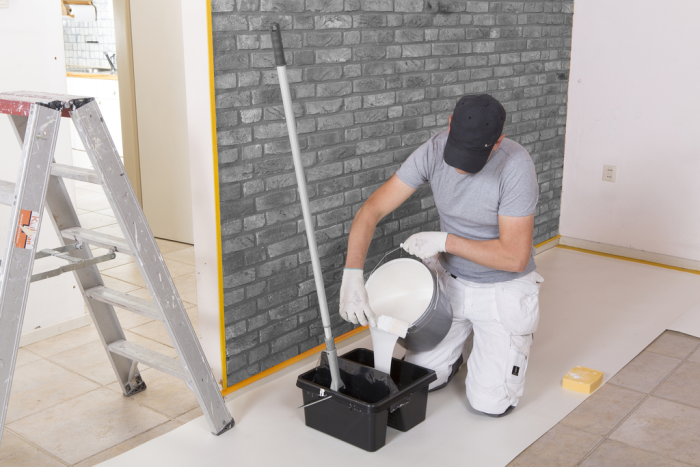
A good strategy to prevent flakes is to pour only the required amount of paint or lacquer into a paint tray or bucket and immediately reseal the original packaging tightly. Is there paint or lacquer in the rim of the can? Remove that first with a brush or non-fluffy cloth before closing the lid firmly.
Tip 3: A strainer or sieve is worthwhile
When pouring unused paint back into the paint packaging, first check carefully that the contents are still completely clean and pure. If you are in doubt or see contamination, use a disposable sieve or strainer to sift the hard particles out of the paint or lacquer.
It will cost you a strainer or sieve, but save you a lot of time and trouble. Many painters already make a habit of filtering any unused paint at the end of the day.
Tip 4: Keep your brush in great shape!
As soon as you notice a brush starting to get heavier, to “pull”, the paint may have already started to dry in the bristles. You can prevent this by firmly pressing any paint out of your brush every several minutes.
If the paint is already drying in the brush hairs, don’t hesitate and clean the brush immediately. The Clean and Go is a low-cost, easy to use and quick tool for deeply cleaning paint brushes. In less than a minute the brush is deeply cleaned and ready for use again. Using a brush that is in good condition, painting with quick drying paints is very rewarding. You might even get the second coat the same day!
Tip 5: Use disposable liners
Are you used to cleaning plastic paint buckets with water or picking the paint out of the bucket after it dries? This seems like saving plastic and therefore environmentally friendly, but it is not.
Microplastics enter drinking water when paint is flushed down the drain. Paint and chemicals in the water circuit is really harmful to the quality of our drinking water, because the chemicals in (water-based) paint mix well with water and are therefore actually difficult or even impossible to filter out completely. Instead of washing buckets clean, it is better to use disposable liners.
Picking up dried paint residues from a tray or bucket is a better, but time-consuming solution. Even then, extremely small paint flakes are often left behind. When these flakes get back into the paint or lacuer, new paint particles will be the first to dry against them. So a tiny particle can still become a very annoying hard particle.
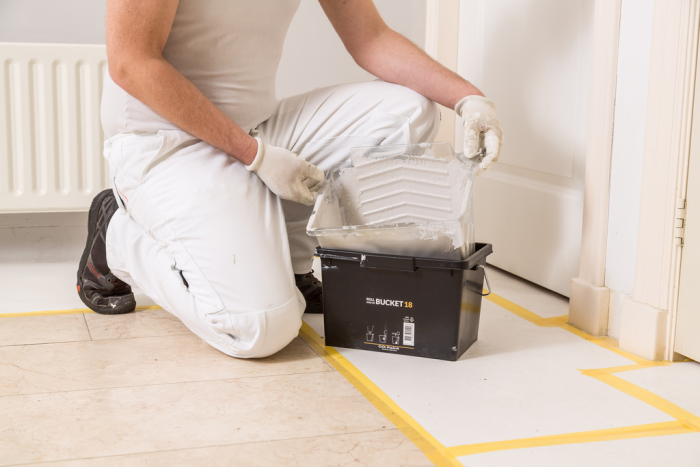
Use clean disposable liners that you throw away – possibly after staying overnight under a tightly sealed lid – after the job. Disposable liners for paint trays and buckers are usually made of recycled material (ours are 100% recycled!) and they are very thin, effectively leaving you with very little waste.
Check out our liners under products or contact us with any questions.